 Pengelolaan infrastruktur TI secara manual masih menjadi sumber utama berbagai permasalahan operasional, seperti inkonsistensi konfigurasi, kesalahan manusia (human error), sulitnya replikasi lingkungan, serta lemahnya kontrol perubahan infrastruktur. Tantangan tersebut semakin kompleks pada lingkungan multi-cloud dan hybrid cloud, di mana organisasi harus menjaga konsistensi, keamanan, dan keterlacakan perubahan infrastruktur secara simultan. Penelitian terbaru menunjukkan bahwa penerapan Infrastructure as Code (IaC) secara terstruktur mampu meningkatkan keandalan sistem, mempercepat provisioning, serta memperbaiki tata kelola perubahan infrastruktur (Rahman et al., 2021; Zhou et al., 2022). Namun, banyak praktisi masih mengalami kesulitan dalam memahami pengelolaan state, modularisasi, serta praktik keamanan pada IaC.
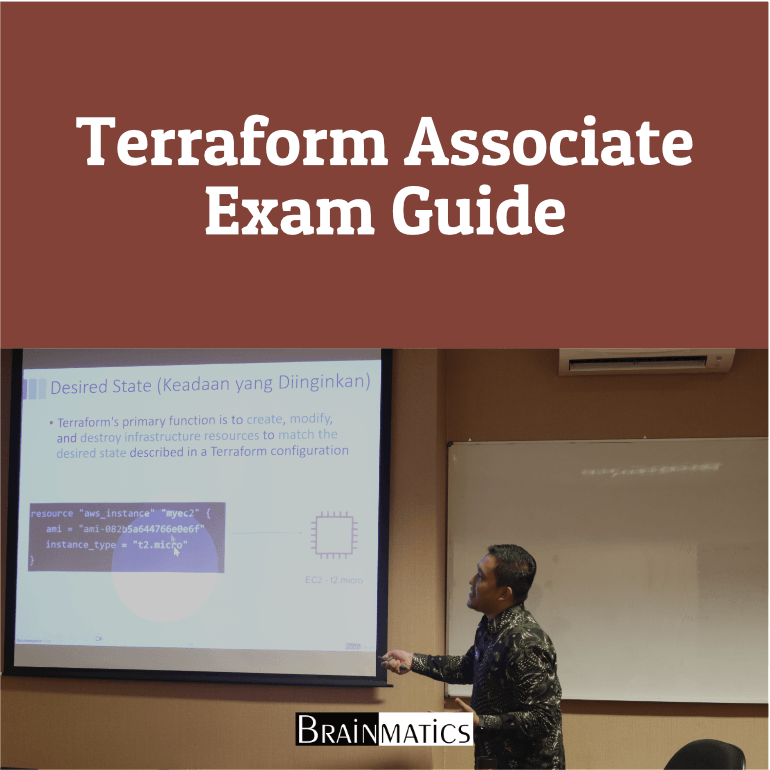
Course Terraform Associate Exam Guide dirancang untuk memberikan pemahaman komprehensif mengenai konsep, praktik, dan alur kerja Terraform sebagai salah satu alat IaC yang paling luas digunakan di industri. Materi mencakup prinsip dasar IaC, arsitektur Terraform yang bersifat provider-agnostic, pengelolaan state, penggunaan modul, serta penulisan konfigurasi menggunakan HashiCorp Configuration Language (HCL). Selain itu, peserta akan mempelajari cara membaca, memodifikasi, dan memelihara konfigurasi Terraform secara aman dan terstruktur, termasuk praktik terbaik dalam pengelolaan secret, dependensi resource, dan integrasi backend.
Course ini didesain untuk membantu peserta mempersiapkan diri menghadapi HashiCorp Terraform Associate Certification. Setiap topik diselaraskan dengan blueprint ujian, sehingga peserta tidak hanya memahami konsep secara teoritis, tetapi juga mampu menerapkannya dalam skenario yang relevan dengan soal ujian.
OBJECTIVES
1. Memahami konsep dan prinsip dasar Infrastructure as Code (IaC)
2. Menguasai alur kerja inti Terraform dari penulisan hingga penerapan infrastruktur
3. Memahami pengelolaan state, backend, dan pencegahan resource drift
4. Mampu menggunakan modul Terraform untuk membangun infrastruktur yang reusable
5. Mempersiapkan peserta untuk menghadapi ujian sertifikasi Terraform Associate
AUDIENCE
1. Cloud Engineers
2. DevOps Engineers
3. Site Reliability Engineers
4. Infrastructure Engineers
5. Platform Engineers
PREREQUISITES
Tidak ada training yang dipersyaratkan
CONTENT
1. Understand Infrastructure as Code (Iac) Concepts
1.1. Explain what Infrastructure as Code (Iac) is
1.2. Benefits of Infrastructure as Code
1.3. Describe advantages of IaC patterns
2. Understand The Purpose of Terraform (Vs Other Iac)
2.1. Explain multi-cloud and provider-agnostic benefits
2.2. Explain the benefits of state
3. Getting Started with Terraform
3.1. Install and version Terraform providers
3.2. Describe plugin-based architecture
3.3. Write Terraform configuration using multiple providers
3.4. Describe how Terraform finds and fetches providers
4. Use Terraform Outside of Core Workflow
4.1. Describe when to use terraform import to import existing infrastructure into your Terraform state
4.2. Use terraform state to view Terraform state
4.3. Describe when to enable verbose logging and what the outcome/value is
5. Interact With Terraform Modules
5.1. Contrast and use different module source options including the public Terraform Module Registry
5.2. Create Reusable Infrastructure with Terraform Modules
5.3. Describe variable scope within modules/child modules
6. Use The Core Terraform Workflow
6.1. Describe Terraform workflow (Write -> Plan -> Create)
6.2. Initialize a Terraform working directory (terraform init)
6.3. Validate a Terraform configuration (terraform validate)
6.4. Generate and review an execution plan for Terraform (terraform plan)
6.5. Execute changes to infrastructure with Terraform (terraform apply)
6.6. Destroy Terraform managed infrastructure (terraform destroy)
6.7. Apply formatting and style adjustments to a configuration (terraform fmt)
7. Implement and Maintain State
7.1. Describe default local backend
7.2. Describe state locking
7.3. Handle backend and cloud integration authentication methods
7.4. Differentiate remote state back end options
7.5. Manage resource drift and Terraform state
7.6. Describe backend block and cloud integration in configuration
7.7. Managing Secrets with Terraform
8. Read, Generate, and Modify Configuration
8.1. Demonstrate use of variables and outputs
8.2. Describe secure secret injection best practice
8.3. Understand the use of collection and structural types
8.4. Create and differentiate resource and data configuration
8.5. Use resource addressing and resource parameters to connect resources together
8.6. Use HCL and Terraform functions to write configuration
8.7. Describe built-in dependency management (order of execution based)
9. Understand Terraform Cloud Capabilities
9.1. Explain how Terraform Cloud helps to manage infrastructure
9.2. Describe how Terraform Cloud enables collaboration and governance
Course Features
- Lectures 41
- Quizzes 7
- Duration 32 hours
- Skill level All levels
- Language Indonesia
- Students 10
- Certificate Yes
- Assessments Yes
- 12 Sections
- 41 Lessons
- 32 Hours
- PERSIAPAN3
- 1. UNDERSTAND INFRASTRUCTURE AS CODE (IaC) CONCEPTS3
- 2. UNDERSTAND THE PURPOSE OF TERRAFORM (VS OTHER IaC)2
- 3. GETTING STARTED WITH TERRAFORM4
- 4. USE TERRAFORM OUTSIDE OF CORE WORKFLOW3
- 5. INTERACT WITH TERRAFORM MODULES3
- 6. USE THE CORE TERRAFORM WORKFLOW7
- 7.16.1. Describe Terraform workflow (Write -> Plan -> Create)
- 7.26.2. Initialize a Terraform working directory (terraform init)
- 7.36.3. Validate a Terraform configuration (terraform validate
- 7.46.4. Generate and review an execution plan for Terraform (terraform plan)
- 7.56.5. Execute changes to infrastructure with Terraform (terraform apply)
- 7.66.6. Destroy Terraform managed infrastructure (terraform destroy)
- 7.76.7. Apply formatting and style adjustments to a configuration (terraform fmt)
- 7. IMPLEMENT AND MAINTAIN STATE7
- 8.17.1. Describe default local backend
- 8.27.2. Describe state locking
- 8.37.3. Handle backend and cloud integration authentication methods
- 8.47.4. Differentiate remote state back end options
- 8.57.5. Manage resource drift and Terraform state
- 8.67.6. Describe backend block and cloud integration in configuration
- 8.77.7. Managing Secrets with Terraform
- 8. READ, GENERATE, AND MODIFY CONFIGURATION7
- 9.18.1. Demonstrate use of variables and outputs
- 9.28.2. Describe secure secret injection best practice
- 9.38.3. Understand the use of collection and structural types
- 9.48.4. Create and differentiate resource and data configuration
- 9.58.5. Use resource addressing and resource parameters to connect resources together
- 9.68.6. Use HCL and Terraform functions to write configuration
- 9.78.7. Describe built-in dependency management (order of execution based)
- 9. UNDERSTAND TERRAFORM CLOUD CAPABILITIES2
- LATHIAN UJIAN5
- PENUTUPAN2